In This Article
You've discovered that your mom or dad lost money — sometimes their savings — to a crypto scam. You want to fix it. You're also scared, angry, and maybe not sure how to help without making the situation worse. This guide covers exactly what to do, in what order, and how to approach your parent about it.
If your parent is currently engaged with the scam and still depositing funds, stop the bleeding first. Contact their bank to flag or freeze the relevant account. Read the "still sending money" section before anything else.
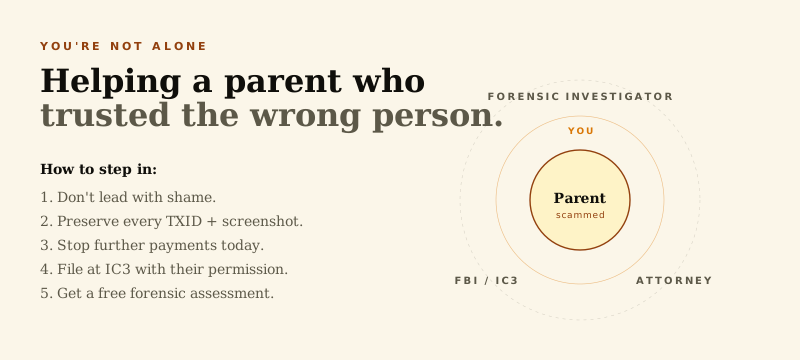
The two most important things: don't blame them, and don't delete anything. These scams are sophisticated enough to fool intelligent, financially experienced adults. Your parent needs your support, not your judgment — and every piece of evidence they have is needed for recovery options. Act quickly to secure their accounts, preserve evidence, and file reports. Then explore on-chain recovery.
The Most Important Thing First: Don't Shame Them
Crypto scams — particularly pig butchering investment scams and romance scams — are operationally sophisticated. The people running them are professional manipulators who spend weeks or months building trust before any money is moved. The average pig butchering victim loses over $100,000 over a period of three to six months. These scams catch sophisticated, intelligent people who have managed their finances successfully for decades.
Shame is the primary reason victims don't report, don't seek help, and — most critically — continue sending money after they've begun to have doubts. If your parent feels blamed, they're more likely to hide the situation from you to avoid further embarrassment, which prevents you from helping at all.
The approach that works: express concern without accusation, ask questions rather than make statements, and emphasize that you want to help them figure out what happened — not to punish them for being deceived. Once they trust that you won't shame them, they'll tell you the full picture, which is what you need to help.
If They're Still Sending Money to the Scam
This is the most urgent scenario. Scammers actively coach victims to hide the investment from family members, often framing concerned relatives as "jealous" or "trying to sabotage" their profits. Your parent may resist your help and push back strongly.
Steps to stop the bleeding:
- Contact their bank directly. If you can document the fraud pattern (screenshots, the platform name, transaction history showing repeated transfers to the same account), many banks will flag the account and add a delay or hold on future transfers to that destination.
- Ask questions, don't make accusations. "Have you ever successfully withdrawn any money from this platform?" is more effective than "this is a scam." Most withdrawal-block scams show their hand the first time a victim tries to withdraw.
- Get a third-party voice. If your parent won't listen to you, a bank fraud officer, an attorney, or a forensic investigator speaking with them directly often carries more weight. It's not coming from a family member they may feel undermined by.
- Show them the withdrawal block pattern. Our guide on platforms that won't let you withdraw documents the exact excuses scammers use. Recognizing the specific tactic used on them can break through denial faster than general warnings.
For more on how pig butchering scams specifically operate — including the long grooming phase that makes victims so invested — see our pig butchering scam recovery guide. Understanding the playbook helps you explain what happened to your parent without it feeling like an attack on their judgment.
Secure Their Accounts Immediately
Change the email password
Their email is the master key. If the scammer has email access, they can reset passwords on every other account. Change it to a unique password and enable two-factor authentication using an authenticator app — not SMS, which can be intercepted via SIM swap.
Freeze credit at all three bureaus
Equifax, Experian, and TransUnion — all three. If the scam collected any personal information (which most do for KYC purposes), a credit freeze prevents new accounts from being opened in your parent's name. It's free and takes about 30 minutes total across all three.
Alert their bank's fraud department
Call the bank's fraud line — not a branch, not general customer service. Explain that your parent was victimized by a crypto investment scam and provide the account numbers involved. Ask about wire recall options if the loss is recent. Request a fraud flag on the account for monitoring.
If remote access was involved, treat all credentials as compromised
If the scam involved any tech support element or screen-sharing, assume every saved password was extracted. Change all financial passwords immediately. Run antivirus and malware scans. Move any remaining crypto assets to fresh wallets with new seed phrases. Read the full remote access theft guide for the complete response.
Add a SIM lock to their phone number
Call their carrier and add a SIM lock PIN. This prevents scammers from porting their number to steal SMS-based 2FA codes. Essential if their phone number was shared with the scam operation.
Gather Evidence Without Touching Anything
Before doing anything else that might delete communications or close accounts, document everything. This evidence is needed for bank fraud claims, reports to law enforcement, and blockchain forensic recovery.
- Screenshot every message thread with the scammer — all platforms (WhatsApp, Telegram, text, email)
- Screenshot the fake investment platform — the homepage, account balance, trade history, any "profit" figures shown
- Screenshot all withdrawal refusal messages and the excuses given
- Record every wallet address your parent sent crypto to
- Save all transaction confirmations from their bank and any crypto exchanges
- Note the scammer's contact information — phone numbers, usernames, profile photos
Do not delete the scam accounts or block the scammer yet. This evidence may be needed. See gathering transaction evidence for a complete evidence checklist.
Every cryptocurrency address your parent sent funds to is traceable on the blockchain. Even if the scammer is anonymous, their wallet activity — where they moved funds, which exchanges they used — is permanently recorded. These addresses are the foundation of any forensic recovery investigation.
File Reports on Their Behalf
Your parent may be too ashamed or overwhelmed to file reports themselves. You can help with this process — for some reports, you can file on their behalf with their consent:
IC3.gov — FBI Internet Crime Complaint Center
The most important filing for crypto fraud. Include the crypto wallet addresses, the platform name, all communication details, the total loss amount, and any wire transfer information. Our IC3 complaint guide shows exactly what to include to maximize the report's usefulness to investigators.
Local police report
File a police report in your parent's jurisdiction. Required by many banks before opening fraud investigations. Establishes an official record of the crime and supports extended fraud alert filings.
FTC — ReportFraud.ftc.gov
Consumer fraud reporting. The FTC aggregates these reports to identify patterns and pursue enforcement against recurring scam operations.
FBI Elder Fraud Hotline — 1-833-FRAUD-11
If your parent is 60 or older, this dedicated hotline prioritizes elder fraud cases. Elder fraud investigations receive additional federal resources and are more likely to be actively pursued.
For a full breakdown of what each agency does with crypto fraud reports and realistic expectations, see does reporting to the FBI actually help.
Real Recovery Options
Recovery depends on timing, amount, and where funds ended up. Be honest with your parent about realistic expectations while pursuing every available option:
- Wire recall — If the loss is recent (within 24 hours) and went via bank wire, call the bank fraud line immediately. The window narrows dramatically after the first few hours. See the full bank wire recall guide.
- Credit card chargeback — If any part of the investment was funded by credit card, a chargeback is possible and has better success rates than wire recall. See crypto chargeback options.
- Blockchain forensic trace — On-chain funds can be traced even through complex wallet-hopping. A forensic investigator follows the trail to identify which exchange ultimately received the funds. This report is the foundation for civil litigation and law enforcement-assisted exchange subpoenas.
- Civil litigation — With a documented forensic trace, attorneys can subpoena exchanges for the scammer's KYC identity data. For losses over $50,000, this is a viable path. See blockchain forensic evidence in federal civil litigation.
For an honest assessment of recovery probability across different scenarios, see can you get crypto back after being scammed and realistic recovery timelines.
If Your Parent Is Elderly
Elder fraud in crypto is a federal priority. If your parent is 60 or older, additional resources and escalation paths exist:
- FBI Elder Fraud Hotline: 1-833-FRAUD-11. Dedicated line that prioritizes elder financial fraud cases, often resulting in more active case pursuit than standard IC3 filings alone.
- CFPB Elder Fraud Prevention. The Consumer Financial Protection Bureau has resources and reporting channels specifically for elder financial exploitation.
- Adult Protective Services (APS). Many states treat elder financial exploitation as a form of elder abuse, giving APS units investigative authority separate from traditional law enforcement.
- AARP Fraud Watch Network: 877-908-3360. Fraud counselors who can advise on next steps and connect to legal resources.
The Emotional Side of This
Your parent may go through denial, anger, shame, or grief — sometimes cycling between them. Some specific things to know:
Denial is common even after discovery. Romance scammers in particular create strong emotional bonds that don't break just because you've shown evidence of fraud. Your parent may defend the scammer for some time. Be patient. The cognitive dissonance of "I was manipulated by someone I trusted deeply" takes time to process.
The financial loss may not be the only loss they feel. In romance scams especially, victims lost what felt like a real relationship. The grief is compounded — financial and emotional at the same time. Professional counseling, including therapists who specialize in fraud trauma, can help.
Watch for a second round. Recovery scam operators target victims specifically because they're desperate and still want to believe recovery is possible. Any unsolicited contact about recovering your parent's crypto — even from someone who knows specific details about their case — should be treated as a scam. See someone said they can recover my crypto for how these second-round scams work.
Protecting Them Going Forward
After the immediate response, consider setting up longer-term protections:
- Credit monitoring service (several free options exist through the credit bureaus)
- A trusted contact designation at their bank — authorizes the bank to contact you if they observe suspicious activity on the account
- Regular check-ins about new "investment opportunities" — create an open channel where they can ask you before sending money anywhere
- Two-factor authentication on all financial accounts, using an authenticator app rather than SMS
Frequently Asked Questions
My parent is still sending money to the scam — how do I stop them?
Contact their bank to flag the account. Ask your parent open questions — "Have you ever successfully withdrawn?" — rather than accusing them. A third-party voice like a bank fraud officer or investigator sometimes breaks through when family can't. Show them the specific withdrawal-block tactics in our platform scam guide.
Can we get my parent's crypto back?
Depends on timing and where funds ended up. Blockchain forensics can trace on-chain funds even through complex hops. When funds reach a regulated exchange, civil subpoenas or law enforcement referral with a forensic report can compel the exchange to act. Early action and good documentation improve odds significantly.
My parent gave the scammer remote access to their computer — what do I do?
Treat all saved passwords as compromised. Change email and all financial passwords immediately. Freeze credit. Run malware scans. Move any remaining crypto to fresh wallets with new seed phrases. The full response is in our remote access guide.
Should we involve elder fraud agencies if my parent is elderly?
Yes. The FBI Elder Fraud Hotline (1-833-FRAUD-11) and Adult Protective Services both handle these cases and often escalate them higher than standard IC3 filings. Elder fraud cases receive dedicated federal resources.
My parent is embarrassed and doesn't want to report — how do I handle that?
Remind them these scams are operationally sophisticated and catch intelligent people regularly. Reporting creates documentation needed for any recovery action, and helps prevent others from being victimized. You can help file reports on their behalf. The shame will ease over time — especially if they see concrete steps being taken.
Helping a Parent Who Lost Crypto? We Can Review the Case.
We'll look at what happened, trace any on-chain activity, and explain your real recovery options in plain language — at no cost for the initial consultation.