In This Article
You're here because something feels wrong. Maybe the investment returns seem too good. Maybe the person coaching you through this process is asking for more money again. Maybe you just can't shake the feeling that you're being manipulated into something you don't fully understand.
Trust that feeling. Crypto fraud is specifically engineered to override your instincts by layering urgency, manufactured trust, and social proof on top of what is, at its core, a simple theft. If your gut is sending signals — pay attention to them right now.
Stop — Before You Do Anything Else
Do not send another dollar, another satoshi, or another USDT until you've finished reading this page. If you're being pressured to act before a deadline — "the opportunity closes in 24 hours," "you need to deposit now before the window closes" — that pressure is itself a manipulation tactic. Real investment opportunities do not evaporate in 24 hours. Slow down.
The moment you pause, you've already broken the most powerful tool scammers have: momentum. They need you to keep moving forward without reflecting. Taking five minutes to think clearly is genuinely protective.
The Gut-Check Questions
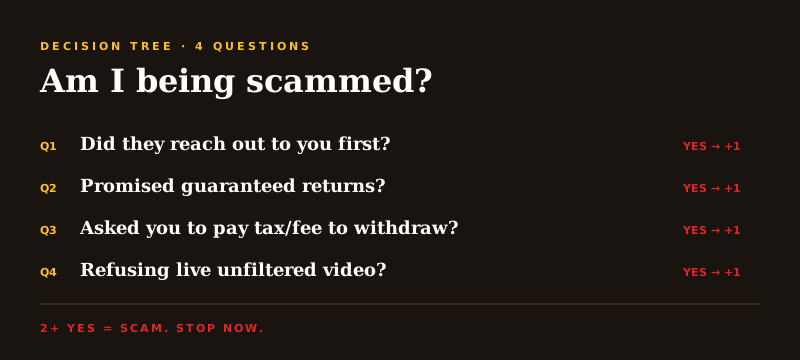
Answer these honestly. Each "yes" is a signal:
Scam Signal Check
If you answered yes to three or more of these — especially any marked High Risk — you are very likely in an active scam. The rest of this guide tells you what to do.
How to Verify If a Platform Is Real
Before concluding anything, verify the platform through independent channels:
- FINRA BrokerCheck (brokercheck.finra.org). Search the platform name. Registered US investment platforms appear here. Absence is not definitive proof of a scam, but it's a red flag for any platform claiming to be US-based.
- FinCEN MSB Registrant Search. Legitimate US crypto exchanges register as Money Services Businesses. Check fincen.gov/msb-registrant-search.
- WHOIS domain check. A platform claiming to have operated since 2018 but with a domain registered three months ago is fraudulent.
- Block explorer verification. Find a transaction you made and look it up on Etherscan, Blockchain.info, or the relevant chain's explorer. If you can't find your deposit as a real on-chain transaction, the platform is fake. See our block explorer beginner's guide.
- Reddit and Google search. Search "[platform name] scam" and "[platform name] review" on Reddit, Google, and Trustpilot. Fake platforms often have victim warning threads.
- Small withdrawal test. Request a withdrawal of a small amount. Legitimate platforms process withdrawals. Scam platforms block them with fees or technical reasons. See our full breakdown at I can't withdraw from my crypto platform.
For a comprehensive guide to identifying fake exchanges, see our knowledge base article on how to tell if a crypto exchange is legitimate and the am I being scammed checklist.
Which Scam Type You're Likely In
Most active crypto scams fit one of these patterns:
Pig butchering (fake investment platform). A trust relationship was built over weeks or months, then an investment platform was introduced. Returns look great, but withdrawal is eventually blocked. This is the most financially devastating type — losses frequently reach six figures. Read the full breakdown at pig butchering scam recovery.
Romance scam with investment component. A romantic relationship developed online, and investing together came up naturally in the relationship. The "romantic partner" is a scammer operating a scripted playbook. See the romance scammer playbook to recognize where you are in the script.
Task scam / side gig fraud. You were offered an online job — rating products, completing tasks, or boosting app reviews — and started receiving crypto payments. Now you're being asked to deposit funds to "upgrade" or unlock your earnings. Full breakdown at task scams and side gig fraud.
Fake trading mentor or signal group. Someone on social media or Telegram promised trading signals, mentorship, or copy-trading. They've been directing your trades on a platform they control. The pattern follows the same withdrawal-block endpoint as other fake platform scams.
If You've Already Sent Crypto
If money has already moved, here is the priority sequence:
- Stop all further payments. Every additional payment is a new loss. Nothing you send from this point will unlock your funds — it will only increase your total theft.
- Preserve all evidence immediately. Screenshot your account balance, every transaction record, and every communication with the platform and the person who introduced it. Do not delete anything. See gathering transaction evidence.
- Contact your bank if any funds came from your bank account. Wire recalls and ACH reversals have narrow windows. Call immediately.
- File reports with IC3 and the FTC. Use our IC3 complaint guide to file with maximum detail. The on-chain data you include makes your complaint significantly more actionable.
- Get a forensic trace started. On-chain funds can be traced. Knowing where your money went is the foundation of every recovery option — law enforcement support, civil litigation, or exchange-level intervention. See what to do after a crypto scam for the complete first-24-hours guide.
If You Haven't Sent Anything Yet
If you caught this before sending money, you're in the best possible position:
- Do not send anything. Not a test amount. Not a "small investment to see how it goes." Once money moves to a scammer's wallet, recovering it requires significant effort and is never guaranteed.
- Document the scam. Screenshot every communication, the platform, and every interaction you had with the person who introduced it. This documentation is valuable for reports.
- Report it anyway. Reporting a scam you avoided still contributes to enforcement patterns that protect other victims. File at IC3.gov and the FTC's ReportFraud.ftc.gov.
- Review your exposure. Even if you didn't send crypto, consider whether you gave the scammer personal information — ID documents, bank account details, or your address. If so, see our guide on what to do when a scammer has your personal information.
Crypto scams that get this far are specifically engineered to fool intelligent, financially aware people. The trust-building phase — which can run for months before any money is requested — is designed by professional psychologists working for organized crime networks. If you got this far, it reflects the sophistication of the attack, not a failure of your judgment. The only thing that matters now is what you do next.
How to Report It
- IC3.gov — FBI's Internet Crime Complaint Center. File with every wallet address, transaction hash, and platform detail you have. Use our step-by-step FBI reporting guide.
- ReportFraud.ftc.gov — FTC consumer fraud reporting. Important for aggregate data and consumer protection enforcement.
- Your state attorney general — Many states have active crypto fraud enforcement units. Search "[your state] attorney general crypto fraud."
- The exchange where funds were sent — Report the receiving wallet addresses directly to the exchange's fraud team and request an account review. Include your IC3 complaint number.
Frequently Asked Questions
How do I know if I'm being scammed in crypto right now?
The clearest signs: the investment was introduced by someone you met online; the platform shows unusually consistent high returns; you're being pressured to invest more before a deadline; the platform can't be verified on public registries; and someone is personally guiding your investment process rather than you operating independently on a regulated platform.
Should I confront the person I think is scamming me?
Not immediately. Confronting a scammer before documenting everything can cause them to delete records and vanish. First screenshot everything, then stop all investment activity, then report to authorities. Secure evidence before you cut contact.
What if I've already sent money — is it too late?
It's not too late to stop further losses, and may not be too late to recover some of what was sent. Contact your bank immediately if any funding came from a bank account. File IC3 and FTC reports. Get a blockchain forensic trace started — funds are traceable and potentially recoverable if they haven't moved too far from regulated exchanges.
Is the crypto investment platform I'm using real?
Check whether it's registered with FinCEN or the SEC. Search the platform name plus "scam" on Reddit. Verify your deposit as an actual on-chain transaction. Check domain age with WHOIS. Attempt a small withdrawal. If any checks raise concerns, stop.
What happens to my money if I stop engaging with the scam?
Stopping engagement prevents further losses but doesn't affect money already sent — it's on-chain and controlled by the scammer. What stopping does is prevent additional fee payments that compound your loss. The money already sent can potentially be traced and may be recoverable depending on its current on-chain location.
Not Sure If What You're In Is a Scam?
We'll look at the platform, the on-chain data, and the pattern of what you've described — and give you an honest read. Free, no pressure, no obligation.