In This Article
The blockchain is public. Every transaction ever made on Bitcoin, Ethereum, or most other major chains is permanently recorded and readable by anyone — no account, no access request, no fee. Block explorers are simply the interface that makes that data readable to humans.
If you've been scammed, lost funds to a bad transfer, or just want to understand where your crypto has been, this guide will walk you through how to use block explorers from scratch.
What a Block Explorer Is
A block explorer is a search engine for the blockchain. You enter a wallet address, transaction hash, or block number and get back a complete, human-readable record of everything that happened. Think of it as a public ledger viewer — the data has always been there; the explorer just formats it so you can read it.
Every transaction on a public blockchain is recorded permanently. This includes the sending address, receiving address, amount transferred, timestamp, transaction fee, and confirmation status. None of this requires a login to view — it's public infrastructure.
Which Explorer to Use for Each Chain
| Chain / Asset | Explorer | URL |
|---|---|---|
| Bitcoin (BTC) | Blockchain.com or Blockchair | blockchain.com/explorer · blockchair.com |
| Ethereum (ETH) + ERC-20 tokens (USDT, USDC) | Etherscan | etherscan.io |
| BNB Smart Chain (BSC) | BscScan | bscscan.com |
| Solana (SOL) | Solscan | solscan.io |
| Polygon (MATIC) | PolygonScan | polygonscan.com |
| Tron (TRX / USDT-TRC20) | Tronscan | tronscan.org |
| Multi-chain (BTC, ETH, and more) | Blockchair | blockchair.com |
USDT (Tether) exists on multiple chains. The most common are Ethereum (ERC-20) and Tron (TRC-20). If you're not sure which network your USDT was on, check the wallet address format: Ethereum addresses start with "0x", Tron addresses start with "T". Use Etherscan for the former, Tronscan for the latter.
How to Read a Transaction
Every transaction has a unique identifier called a transaction hash (also called a TX hash or TXID). It looks like this: 0x4f3a...b7e2
You'll find your transaction hash in your wallet app, exchange withdrawal history, or email confirmation. Paste it into the appropriate explorer's search bar to pull up the full record.
Here's what each field on a transaction page means:
The unique identifier for this specific transaction. Permanent and unchangeable.
"Success" means the transaction completed. "Pending" means it's waiting to be included in a block. "Failed" means it was broadcast but didn't execute (common with smart contract interactions).
The block number this transaction was included in. Higher block number = more recent. Each block on Ethereum takes ~12 seconds; Bitcoin takes ~10 minutes.
The exact date and time the transaction was confirmed. This is important for building a timeline in a scam investigation.
The wallet address that sent the funds. In a scam, this is typically your wallet.
The wallet address that received the funds. This is your starting point for tracing.
The amount of the native chain asset transferred (ETH, BNB, etc.). Token transfers (USDT, USDC) appear separately in the "Token Transfers" section below.
The gas fee paid to process the transaction. This goes to validators/miners, not the recipient. It's non-refundable regardless of outcome.
How to Read a Wallet Address
Searching a wallet address (rather than a transaction hash) shows the complete history of that wallet — every incoming and outgoing transaction, current balance, and token holdings.
Key things to look for on a wallet page:
- Transaction count — A wallet with thousands of transactions is likely an exchange hot wallet or a scammer's collection address used across many victims.
- Outgoing transactions after your deposit — These show where your funds moved next. Click each one to trace the chain.
- Token transfers tab — If you sent USDT, your transfer will appear here, not in the main ETH transactions list.
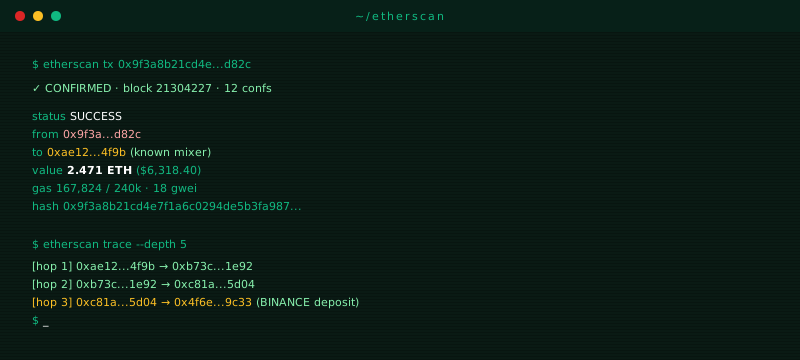
- Labels — Etherscan labels known addresses. If the receiving wallet is labeled "Binance: Hot Wallet" or "Kraken: Deposit," this tells you the funds moved to a specific exchange — a very important finding for law enforcement.
- Contract interactions — If the address is a smart contract rather than a personal wallet, you'll see "Contract" displayed next to it.
How to Follow Funds Across Wallets
This is the manual version of what investigators do with specialized software. It's slower and less comprehensive, but anyone can do it for a basic trace:
-
1
Find your outgoing transaction
In your wallet app or exchange history, find the transaction hash for the funds you sent. Paste it into the appropriate block explorer.
-
2
Identify the receiving address
On the transaction page, note the "To" address. Click on it to see that wallet's full history.
-
3
Look for outgoing transactions
On the receiving wallet page, filter for outgoing transactions after the timestamp of your deposit. Note where funds went next.
-
4
Repeat for each hop
Follow each outgoing transaction to its destination. Look for labeled addresses (exchanges) or wallets with high transaction counts (likely exchange deposit addresses).
-
5
Document everything
Record each wallet address in the chain, the transaction hashes connecting them, and the amounts at each step. This is the beginning of a forensic chain of custody.
What Block Explorers Can't Tell You
Block explorers show you the on-chain data — but not everything. Limitations include:
- Identity — You can see that
0x7F4a...received funds, but not who owns that address. That requires exchange cooperation or legal process. - Cross-chain moves — If funds were bridged from Ethereum to Tron or another chain, the trace ends at the bridge and you need to restart on the destination chain.
- Mixer obfuscation — Funds routed through mixers (Tornado Cash, etc.) are difficult to trace manually. This requires specialized software and methodology.
- Off-chain activity — P2P trades, cash-outs, or OTC transactions don't appear on-chain.
Manual block explorer tracing works well for simple, single-chain cases. If funds went through multiple chains, multiple wallets, or a mixer — or if you need a documented report for law enforcement — a forensic investigator with professional-grade tracing software will get further, faster, and produce findings that hold up in a legal context.
Using a Block Explorer After a Scam
If you've been scammed, here's exactly what to look up and record:
- The transaction hash(es) for every outgoing transaction you made to the scammer
- The receiving wallet address(es) — paste each into the explorer and note the full address
- The first outgoing transaction from each receiving wallet (this shows where funds moved immediately)
- Any exchange labels on downstream wallets (Binance, Coinbase, Kraken, etc.)
- The total amount transferred and timestamps for each transaction
Screenshot everything. This data is permanent on the blockchain, but having it organized before you engage law enforcement or a forensic investigator saves time and demonstrates you've done your homework.
One thing to watch for: if the receiving wallet shows hundreds or thousands of prior transactions before yours, your funds are likely going into a high-volume collection address used across many victims. This is actually useful forensic information — it suggests an organized operation and may connect your case to others already under investigation.
Need a Professional Trace?
Manual block explorer work gets you started. When you need a documented forensic report for law enforcement, an attorney, or an exchange fraud team — we take it the rest of the way. Free consultation to assess your case.