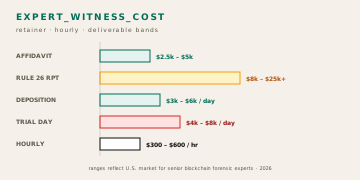
Crypto expert witness hourly rates span $120 to $1,000+ in 2026 depending on who you hire. Independent investigators (the same people who write the affidavits and Rule 26 reports at the back of a firm engagement) start at $120–$200/hr. Firm seniors charge $400–$600/hr. Former-federal marquee names go $600 to $1,000+. The deliverable is the same; the price difference is overhead and brand premium, not work product.
Most attorneys never need the firm-senior rate. A standalone forensic affidavit runs $1,500–$5,000, a full Rule 26 expert report $5,000–$25,000, deposition day rate $3,000–$6,000, trial day rate $4,000–$8,000. Independent investigators often scope per case rather than billing strict hours.
In This Article
- What hourly rate do crypto expert witnesses charge?
- Cost summary at a glance
- Hourly rate ranges by experience level
- Cost by deliverable type
- How retainers actually work
- What quietly drives the cost up
- Fee shifting and cost recovery
- Fixed-fee engagements
- Building a defensible budget
- Frequently asked questions
Attorneys email me this almost weekly. "Zack, what's a crypto expert witness actually going to cost?" Honest answer: it depends, but the ranges are tighter than most lawyers expect. I'll walk through what I've seen across engagements this year, from solo family-law cases up through federal civil litigation.
This is the real picture, not theory. These are the numbers on actual engagement letters in 2026. If you're scoping a case, presenting a budget to a client, or trying to figure out whether a $9,000 retainer is reasonable, the next 10 minutes are for you.
The demand backdrop matters before getting into rates. The FBI's Internet Crime Complaint Center reported $9.3 billion in cryptocurrency investment fraud losses in 2024, a 66% jump over 2023. Chainalysis's 2024 Crypto Crime Report measured $24.2 billion in illicit cryptocurrency activity in 2023, with stolen funds alone accounting for $1.7 billion. That case volume is what's driving attorneys to retain crypto forensic experts in the first place, and the rates below reflect a market where qualified experts are in shorter supply than the case load.
The legal floor for who can give that testimony is set by Federal Rule of Evidence 702:
"A witness who is qualified as an expert by knowledge, skill, experience, training, or education may testify in the form of an opinion or otherwise if the expert's scientific, technical, or other specialized knowledge will help the trier of fact to understand the evidence or to determine a fact in issue."
— Federal Rule of Evidence 702(a)
That single statutory line is what defines the entire expert-witness market. The rates below price into who can credibly satisfy each prong of FRE 702 for the court your matter is in front of.
For the bigger picture on when you actually need an expert and what they do (scope, qualifications, deliverables, Daubert), the pillar piece is blockchain forensic expert witness: what attorneys need to know.
What hourly rate do crypto expert witnesses charge?
The honest range is $120 to $1,000+ per hour. Where you land depends almost entirely on whether you hire an independent investigator or a name-brand firm. Both produce admissible work. The spread is overhead, brand, and bench depth, not actual tracing skill.
Here's what happens most of the time. An attorney needs a crypto expert. They Google "crypto forensic expert witness." The first three results are firms charging $450 to $600 per hour. The client sees the quote and chokes. Then the case stalls because nobody wants to be the person who said yes to a $20K retainer.
What attorneys miss: there's an entire tier of independent investigators who came up through the same training stack (Chainalysis, TRM, Elliptic), write the same Rule 26 reports, and bill at $120 to $200 per hour. Same admissible work, no firm overhead loaded on top. The reason they don't show up first on Google is they don't have a marketing budget. That's it.
Cost summary at a glance
Pull-out reference for the numbers I'll dig into below. These are 2026 U.S. market rates, gathered from real engagement letters and quotes seen this year. The left column is what an independent investigator usually scopes for the same deliverable an established firm bills at the right-column rate:
| Engagement Item | Independent Investigator | Established Firm |
|---|---|---|
| Hourly rate | $120 to $250 | $400 to $1,000+ |
| Initial scope call | Free | Free to $250 |
| Forensic affidavit | $1,500 to $3,500 | $3,500 to $7,000 |
| Standard tracing report | $2,000 to $5,000 | $5,000 to $12,000 |
| Full Rule 26 expert report | $5,000 to $15,000 | $12,000 to $35,000+ |
| Multi-chain complex investigation | $6,000 to $18,000 | $15,000 to $40,000+ |
| Deposition day rate | $2,500 to $4,500 | $4,000 to $8,000 |
| Trial testimony day rate | $3,000 to $6,000 | $5,000 to $10,000+ |
| Initial retainer | $1,500 to $5,000 | $5,000 to $15,000 |
Independent investigator deliverables are admissible in the same proceedings; the price difference reflects overhead and brand, not work product or methodology.
Hourly rate ranges by tier
Engagements either bill hourly or scope per case. Here's how each tier breaks down and where they actually fit:
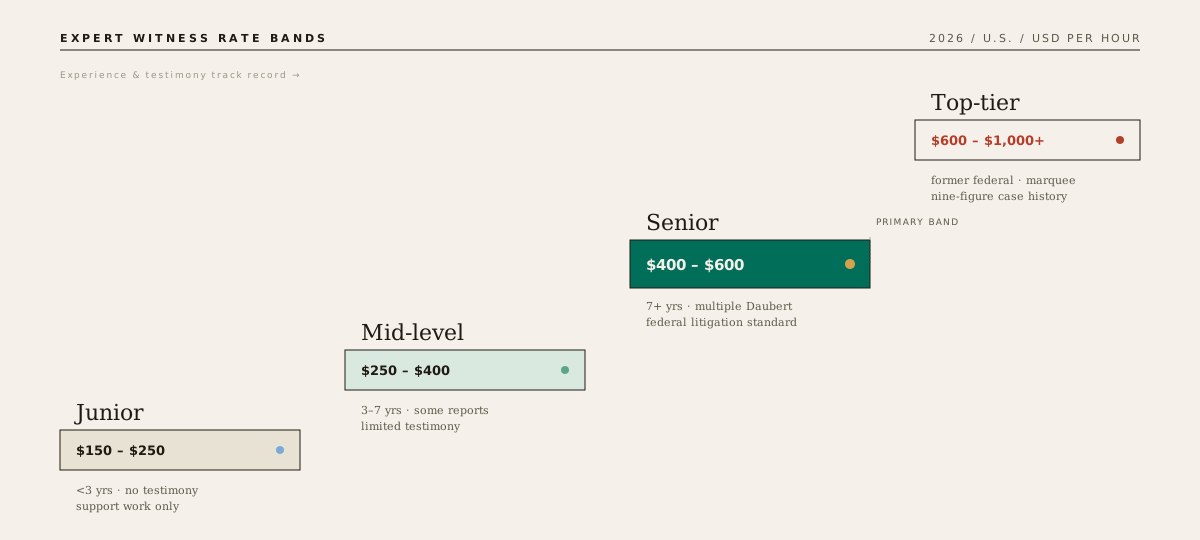
- Independent investigator (solo or small practice, same training as firm staff, scopes per case): $120 to $250 per hour, or a flat per-case fee. This is the tier most attorneys overlook because it doesn't show up in the first three search results. Produces admissible affidavits and Rule 26 reports, handles depositions and trial testimony, has prior admissible testimony. Just without firm overhead loaded on top. Right hire for state-court matters, family-law files, freezing orders, bankruptcy-trustee work, insurance claims, pre-suit tracing, and most federal civil litigation outside the bet-the-company tier.
- Junior firm analyst (under 3 years, no prior testimony, supporting role at a firm): $150 to $250 per hour. Used as the analyst behind a senior expert's name on the report cover. You don't put them on the stand, and you're paying for the firm's brand on the deliverable.
- Mid-level firm investigator (3 to 7 years at an established firm, some written reports, limited testimony): $250 to $400 per hour. Comparable skill to an independent investigator with the firm's logo on the report.
- Senior firm expert (7+ years, multiple admissible testimonies, established methodology): $400 to $600 per hour. Standard for big-firm federal litigation. Defensible when opposing counsel is a national firm with a national-firm expert and Daubert risk is real.
- Top-tier expert (former federal investigator, marquee case history, regularly retained in nine-figure matters): $600 to $1,000+ per hour. You're paying for the name on the report cover. Worth it when the case is bet-the-company. Overkill for most attorneys.
Within each band, geography and specialization shift rates. Experts based in NYC, DC, and SF charge more, not because they're necessarily better, but because their cost structure is higher. DeFi, cross-chain, and NFT-focused experts can charge 10 to 20% more when their niche actually matters to the case. And a track record of admissible testimony is the single biggest driver inside any band: an expert who's survived three Daubert challenges is worth meaningfully more than an equally-skilled analyst who hasn't been there yet.
Cost by deliverable type
Hourly rates tell you the unit price; what the engagement actually costs depends on what you're asking for. Here's what each deliverable looks like in practice:
Initial scope call and case assessment
Free, in most cases. Any reputable expert will give you 20–30 minutes to talk through whether the case is workable. Some firms charge a nominal $150 to $250 case-assessment fee that gets credited against the retainer if you engage. Anything more than that for a first call is a yellow flag — you should never pay $1,000 just to find out if your case has legs.
Forensic affidavit
Independent investigator: $1,500 to $3,500. Firm: $3,500 to $7,000. A sworn statement of facts and findings, usually four to ten pages, used to support an emergency motion, a freezing order, or a preliminary application. Tightly scoped to a single chain and a discrete factual question. Fast turnaround, narrow focus, low risk of opposing-counsel pushback because you're not opining on a contested theory — you're swearing to what the chain shows.
Standard forensic report (non-litigation)
Independent investigator: $2,000 to $5,000. Firm: $5,000 to $12,000. A full tracing investigation with a structured written report, transaction graph, and an exchange-identification list. This is what victims commission for insurance claims, what attorneys order pre-suit to figure out whether to file, and what's used in mediations. Not a Rule 26 deliverable, but real work that produces real evidence.
Rule 26 expert report (federal litigation)
Independent investigator: $5,000 to $15,000. Firm: $12,000 to $35,000+. The full FRCP 26(a)(2)(B) deliverable: opinions, the basis for each opinion, exhibits, the expert's qualifications, prior-testimony list, and compensation disclosure. The variance is real. A simple two-hop, single-chain federal case with clean facts lands near the bottom. A multi-victim pig-butchering matter that involves Tornado Cash, Tron, and Solana lands at the top.
Multi-chain complex investigation
Independent investigator: $6,000 to $18,000. Firm: $15,000 to $40,000+. Cases that cross two or more chains, involve DeFi protocols or bridges, encounter mixing services, or consolidate multiple victims. Most of the work isn't the tracing itself — it's reconciling the tools used on different chains and writing the report in a way that holds up to a Daubert motion. These are usually the cases where the expert engagement is the central piece of evidence.
Deposition
Day rate: $2,500 to $4,500 (independent) or $4,000 to $8,000 (firm), half-day minimum. Under Federal Rule 26(b)(4), the deposing party (usually opposing counsel) usually pays the expert's reasonable fees for the time on the record. Prep time is yours and bills hourly. Total deposition cost including prep usually lands at $3,000 to $7,000 with an independent investigator, $5,000 to $12,000 with a firm.
Trial testimony
Day rate: $3,000 to $6,000 (independent) or $5,000 to $10,000+ (firm), plus hourly prep, plus travel at cost. A two-day trial appearance with thorough prep usually runs $7,000 to $15,000 total with an independent investigator, $15,000 to $30,000 with a firm. The variance comes mostly from prep — some experts can be dropped into the witness chair after a one-hour briefing; most need a day or two with the case file.
How retainers actually work
Almost every blockchain forensic expert works on a retainer. The mechanics are pretty standard, but the size of the initial deposit varies more than people expect:
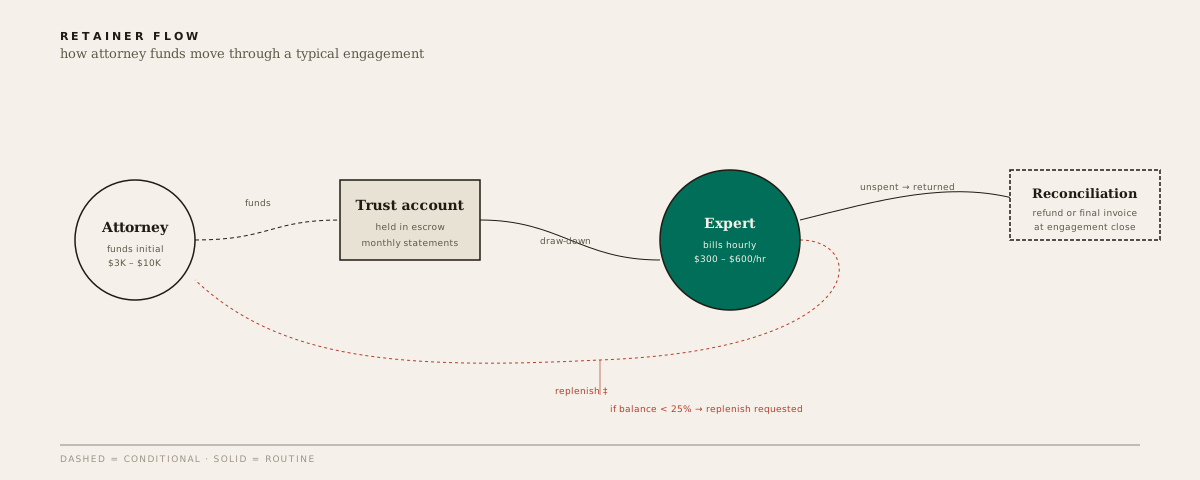
- Initial retainer. The attorney funds a deposit. With an independent investigator this is usually $1,500 to $5,000 depending on scope. With an established firm it's $5,000 to $15,000. It sits in trust. Smaller cases (single affidavit) trend toward the bottom; full litigation engagements toward the top.
- Hourly draw-down. The expert bills against the retainer. You should get an itemized monthly statement with task descriptions and time entries — if you don't, ask for one before the next billing cycle. Some independent investigators offer per-case scoping instead of strict hourly billing, which removes the runaway-bill risk.
- Replenishment. When the retainer drops below a threshold (usually $1,000 or 25% of the original), you'll get a request to top it up. Work pauses if it lags. This is normal; don't take it personally.
- Reconciliation. At the end of the engagement, any unspent retainer comes back to you. Any overrun gets a final invoice.
You're not being unreasonable to ask for any of these: a cap on the initial retainer; advance notice if total fees will blow past a stated number; bi-weekly time-entry reporting instead of monthly; milestone billing tied to defined deliverables; pass-through of analytics-platform license fees at cost rather than marked up; the ability to end the engagement without further commitment beyond hours actually worked. A good expert will agree to most of these without much pushback.
What quietly drives the cost up
When a case ends up costing more than expected, it's almost never because the hourly rate was wrong. It's because one of these factors got underestimated at scope. Here's what to watch.
Case complexity
By far the biggest variable. Single-chain tracing across three or four hops is methodical work, mostly predictable. A case that touches Ethereum, Solana, Bitcoin, and Tron with bridging in between can run ten times the analyst hours of a "simple" case. Not because each chain is individually harder, but because stitching the cross-chain narrative together is most of the actual work product.
Number of transactions
50 transactions and 5,000 transactions are not the same investigation with a multiplier. They're different categories of work entirely. High-volume cases force batch-analysis methodology, which adds documentation burden in the final report so the methodology survives Daubert scrutiny.
Mixing and obfuscation
When a case involves Tornado Cash, Wasabi, JoinMarket, or any other mixer, plan for 1.5x to 2x the cost of an equivalent non-mixed case. The forensic finding stops being deterministic ("the funds went to address X") and becomes probabilistic ("with 87% confidence, these funds correspond to..."). That probabilistic reasoning has to be documented carefully because it's the part opposing counsel will challenge.
Cross-chain bridging
Each cross-chain hop adds analytical work because different chains require different forensic tools and different attribution databases. An investigator who's fluent in Ethereum and Bitcoin doesn't necessarily have the Solana background to do that leg cleanly. A case that bridges from Ethereum to Solana to Bitcoin is really three investigations stitched together.
Deliverable scope
The same factual question answered as an affidavit costs roughly one-tenth what it costs answered as a full Rule 26 report. The procedural posture of your case dictates which deliverable you need — not the underlying complexity. Have this conversation with the expert at scope, not after they've already drafted.
Urgency
Rush work commands a 25% to 50% premium. Weekend turnarounds, emergency TROs, day-of-hearing affidavits — these are all real and reasonable to price up because they bump everything else off the expert's calendar.
Prior testimony record
An expert who's survived multiple Daubert challenges costs more than an equally-technically-skilled analyst who hasn't testified yet. The premium is worth paying when admissibility risk is real. It's not worth paying for pre-suit tracing or insurance work where no one's going to challenge the methodology.
Fee shifting and cost recovery
Don't forget the recovery side of the budget. Expert witness costs are often recoverable from the opposing party under the right procedural posture — this matters when you're presenting a budget to a client who's choking on the upfront number:
- FRCP 26(b)(4)(E) — opposing counsel pays your expert's reasonable fees for time spent in deposition, regardless of which side ultimately prevails. This is automatic in federal civil cases.
- Sanctions for misconduct — expert fees incurred to address discovery violations or concealment can be awarded as sanctions. This gets used more than people realize in crypto cases involving hidden wallets.
- Contractual fee-shifting clauses — most commercial contracts with attorney's-fees-and-costs provisions have been interpreted to include expert witness fees. Read the clause.
- Statutory fee shifting — securities litigation, federal civil rights claims, and certain state consumer-protection statutes provide for fee recovery including expert costs.
- Family law sanctions — forensic expert costs uncovering concealed marital assets are routinely recoverable from the concealing spouse, often as sanctions or as part of the equitable distribution.
- Bankruptcy administrative expenses — trustee-engaged expert costs become administrative expenses paid from recovered estate property. The expert basically gets paid out of what they recover.
If your case has any of these hooks, the realistic out-of-pocket cost to your client may be substantially lower than the gross engagement number. Worth flagging in the engagement letter and the client memo.
Fixed-fee engagements: when they work, when they don't
Some experts offer fixed-fee work for well-defined deliverables. The pattern works for:
- A stand-alone forensic affidavit on a single factual question
- A basic tracing report for an insurance claim or pre-suit assessment
- A wallet-attribution opinion for a discrete diligence question
Where fixed fees fall apart is full litigation. Deposition prep, supplemental reports, motion-in-limine work, and trial testimony are unpredictable — opposing counsel's strategy drives most of the time burden, and you can't quote that fixed in advance. Any expert who'll quote you a flat fee for a full federal litigation engagement is either underestimating it (and will run over) or overpricing it (and you'll pay more than hourly would have cost). Stick to hourly with a defined cap.
Building a defensible budget
The honest way to budget a crypto expert engagement is by case scope, not hourly multiplication. Watch what happens when you do the math the other way: $450 per hour times 40 hours equals a $20,000+ retainer ask in front of your client. That number, on its own, kills more cases than the underlying work ever would. Anchor on what the deliverable actually is instead. Here's what each scope of engagement runs end-to-end, with independent-investigator and firm pricing side by side.
| Engagement Scope | Independent Investigator | Established Firm |
|---|---|---|
| Affidavit only (freezing order or emergency motion) | $1,500 to $3,500 | $3,500 to $7,000 |
| Pre-suit tracing report + scope memo | $2,000 to $5,000 | $5,000 to $12,000 |
| Standard federal Rule 26 report (no deposition) | $5,000 to $12,000 | $12,000 to $25,000 |
| Rule 26 report + deposition | $7,000 to $18,000 | $18,000 to $40,000 |
| Full litigation: report + deposition + trial testimony | $12,000 to $30,000 | $30,000 to $70,000+ |
| Multi-chain complex matter with mixers + trial | $18,000 to $40,000 | $40,000 to $100,000+ |
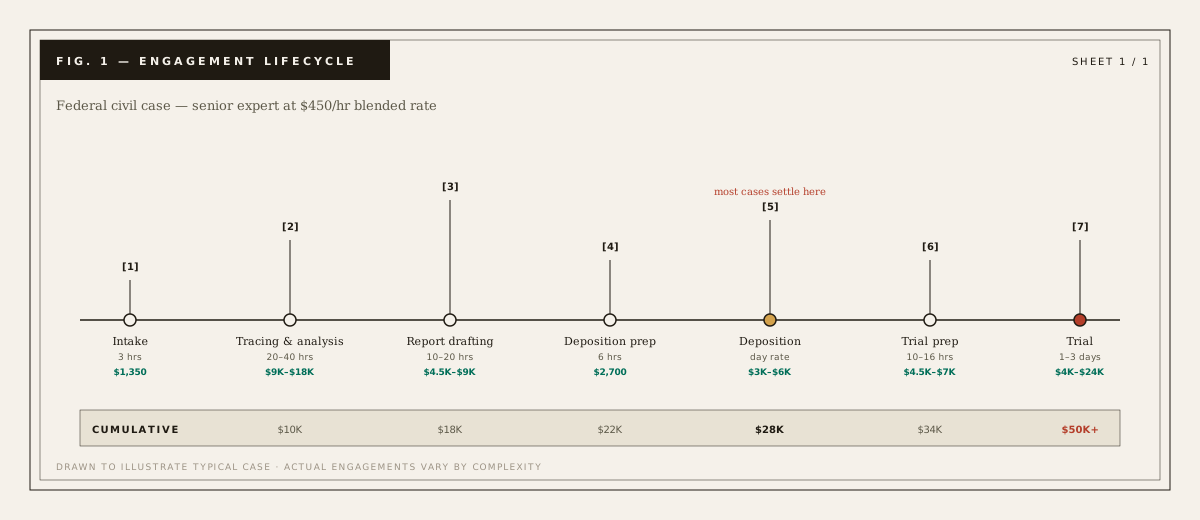
The honest reality: most cases settle before trial. A typical engagement ends at deposition. With an independent investigator, that lands at $7,000 to $18,000 all-in. With a firm, it's $18,000 to $40,000. The work product is comparable. The difference is who's writing the invoice. Build the budget assuming the full picture but tell your client the realistic median (not the worst case) when scoping the commitment. Otherwise the case dies on the retainer ask before you even start.
For deeper context on the full investigation lifecycle (not just the expert-witness slice), see how much does a crypto investigation cost — that piece covers non-litigation tracing engagements where the cost structure is different.
Frequently asked questions
Need a Cost Estimate for Your Case?
Wallet Witness provides written engagement estimates within 24 hours of an initial scope call. Tell us about the case and we will scope the budget defensibly.
Request an Engagement Estimate